Jacob Marley — one of the best-known ghosts in literature.
My conception of Jacob Marley is quite different from the character Charles Dickens created. My Marley had to be different, since the whole story is based on flipping the first six words of the book. Dickens starts with the famous line, Marley was dead, to begin with. My novel begins with Marley was alive, to begin with, and we learn that we’re reading a memoir written by Scrooge’s nephew, Fred, who late in life wants “to set the record straight about the events of Christmas, 1841.”
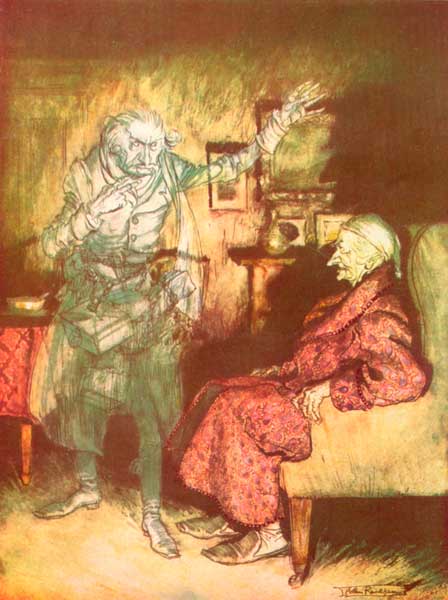
Dickens tells us very little about Marley, the longtime business partner of Scrooge. After emphasizing that he was “dead as a door-nail,” Dickens has Scrooge tell the two portly gentlemen that Mr. Marley “died seven years ago, this very night.” Going home that evening, Scrooge sees Marley’s face in the door-knocker. Later Marley appears as a ghost, and confesses that he forged the chains he wears by not caring for anything except business. Marley has been tasked to let Scrooge know what will happen to him if he doesn’t change his ways. That’s all we know about this Marley.
Fred begins memoir by recounting early childhood memories of meeting Mr. Marley. His uncle Scrooge brought his partner in tow on certain occasions, usually holidays, when he would visit his sister, who was Fred’s mother. Later, when Fred has grown up, Scrooge tells him the truth about Jacob Marley and his roguishness. Some of it is not pretty. Both men loved money. But whereas Ebenezer Scrooge was miserly in his ways, Marley was a spendthrift and hell-raiser who took one chance too many.
So there you have two profiles. Marley is more prominent in my tale, I think, though he’s not the only character to watch. Even though I’ve added a lot to Dickens’s original idea, I have kept Marley’s pigtail intact!

 George Rapier