Some thoughts about an American writing a novel set in Britain.
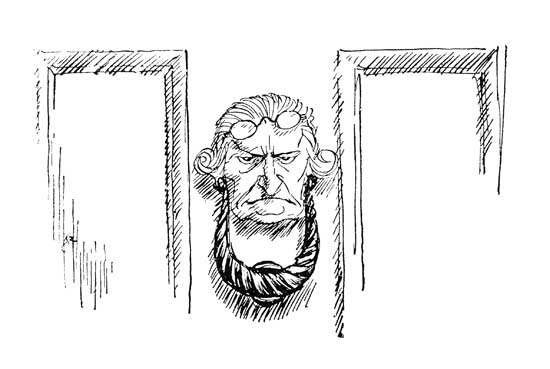
Sometimes I’m amazed that I wrote a quasi-British novel, something I’d never before aspired to do, either as a humorous or serious effort. I’m even more amazed that it got published. How could I dare do something like that? The answer is that in the beginning I treated The Truth About Jacob Marley as a lark, a mere exercise in story-telling. My idea for an alternative version of A Christmas Carol delighted me so much that I kept at it. In the end, I thought there might be something worth sharing.
There was another reason I thought I could handle the task, or at least “give it a go.” After I got started, I felt right at home in the fictional world I was creating. I’m not sure I can call myself an Anglophile, but I’ve read a lot of English writers over the years and think I have a feel for the rhythm of that prose. It sounds bold to say that, but I was feeling pretty confident. And I told myself that if the novel every got tapped for publication, maybe I’d get a British editor to correct any stray errors. Such an editor never appeared, though.
From a prior experience, I knew mistakes could easily happen.
Some years ago I co-wrote a play called Agatha Christie Takes Manhattan. The idea came from Eddie Cope, a fellow playwright and a friend. We were both living in Houston at the time, and he asked me to work on the project with him. This was to be a comedy-mystery featuring Agatha Christie as the main character. She is asked to come to New York to direct a mystery play not of her own making. During rehearsals for the play-within-the-play, there is a murder and guess what? Agatha solves it. Most of the characters were American and eccentric, if not loony. There are a lot of laughs in it. The play was produced in Thousand Oaks, California and later in Houston.
Before any of that, we had a reading of the play before a small audience in Houston to get a reaction and criticism. We asked an actress we knew well, Melrose Fougere, who happens to be English, to read the role of Agatha Christie. During rehearsal for the reading, Melrose found a couple of glaring errors, including a reference to a woman’s “purse,” which I wrote in a line of dialogue. “Oh, no, she would never say that!” she advised us. “It should be ‘handbag.’ A purse is something completely different.”
How was I to know that? There is no way, actually. That’s a word that really sneaks up on you. So I was aware those kind of slips could occur in the Marley novel. Still, I thought because it was set in the early Nineteenth Century I might be safer. I mean, if I knew a word had been used by Dickens, say, I could count on it. If a word sounded questionable to me, I looked it up to see when it entered the language. And some dictionaries have a “British” addendum giving their version of a definition. All of that helped me sleep at night.
So I was careful about word choice during the self-edit phase. But I also felt a need to avoid too many British-isms, especially ones that might turn off readers. So you won’t find “zounds” or “blimey” in the book.
I constantly censored myself myself when I edited, sometimes changing word choices that seemed too British or highfalutin. If I thought a word sounded too exotic to the American ear, I’d substitute another word for it. There was usually a variant or close synonym I could use, one that we would recognize and which was perfectly valid for the speaker to use. As an example, I might have first written “despondent” about someone’s mood. (You’ll find that word in Dickens, actually.) But thinking it was too literary, I might have later substituted “dejected” for it. They mean the same, after all. I know that sounds like I’m “dumbing it down” but not really. They’re both fine English words. I was doing this to make the prose easier to read, even it there was nothing wrong with the first word. I wasn’t trying to emulate Dickens, you see, or impress the reader with my scholarship. On the contrary. The narrator of the story, Fred Truelock, had his own way of talking and writing.
Despite that, one reader told me she had to look up a lot of things anyway. Well, I’m glad she kept reading, for she told me she enjoyed the book.
So I tried hard to make the prose authentic and accessible. Still, if any reader stumbles across this blog and you have found something horrendous in the book, like the use of “purse,” please email me!
 George Rapier